AI and Turnover Rates by Industry in 2026
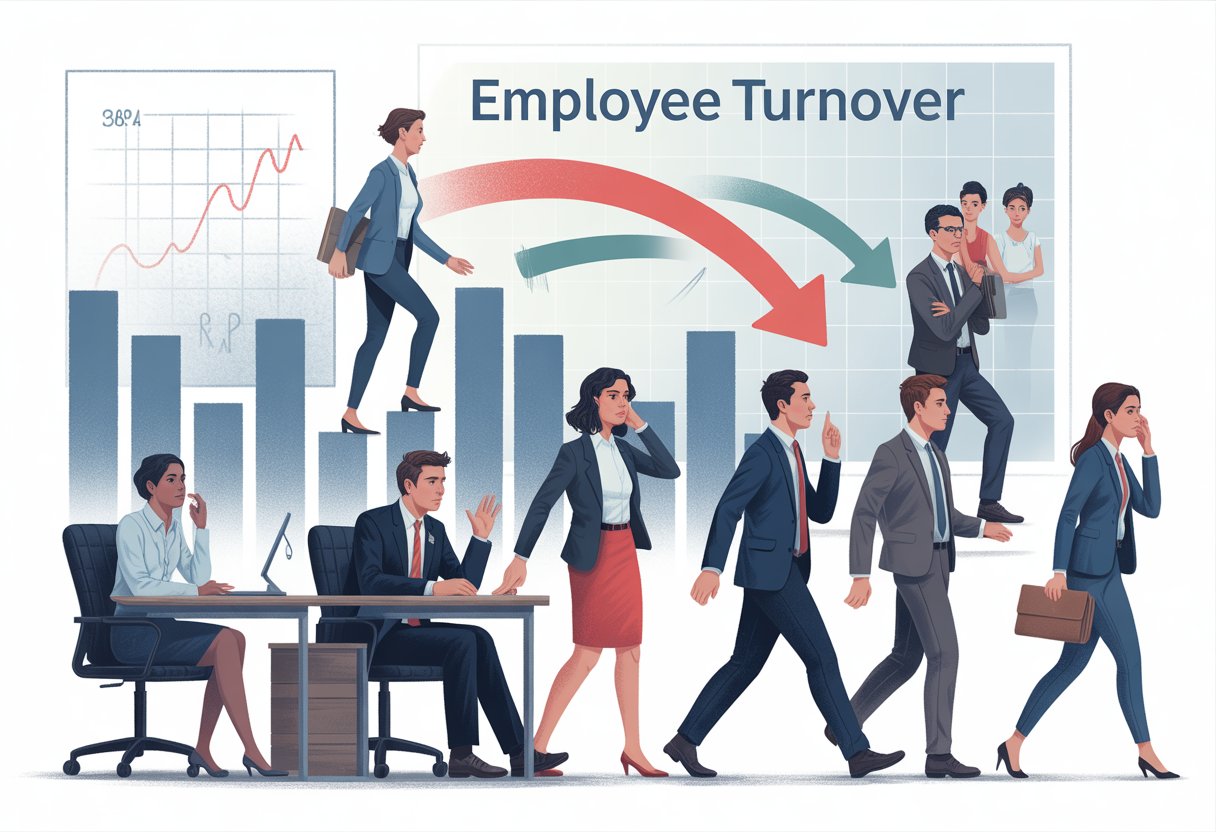
In 2026, employee turnover remains a pressing issue for businesses facing economic uncertainty, competitive talent markets, and rising replacement costs.
Recent surveys indicate that half of U.S. companies expect turnover to increase this year, with the average cost per departing employee now reaching $45,236. These trends highlight the need for proactive retention efforts.
At Growth Systems, our AI-powered solutions enable organizations to automate engagement, predict risks, and deliver personalized experiences that reduce churn and strengthen workforce loyalty.
Understanding Turnover Metrics
Turnover rate measures the percentage of employees leaving an organization over a period, typically annualized as (number of separations divided by average number of employees) times 100.
This essential KPI uncovers issues like dissatisfaction, limited advancement, or mismatched culture. It divides into voluntary (employee-initiated resignations) and involuntary (employer-driven terminations or layoffs).
Voluntary turnover frequently points to engagement or cultural gaps, while involuntary often relates to business changes. Recent U.S. data shows monthly total separations averaging around 3.3% across nonfarm sectors, with voluntary rates stabilizing near 13% annually in some reports, though expectations point to upward pressure in 2026.
High turnover incurs substantial costs through recruitment, training, lost knowledge, and reduced productivity, often totaling tens of thousands per role.
Turnover Trends by Industry in 2026
Rates differ markedly by sector, driven by job demands, pay levels, and talent competition.
Service-oriented and frontline roles face the greatest challenges, while stable or professional fields maintain stronger retention.
Key examples from recent BLS JOLTS data, Qualtrics reports, Mercer surveys, and industry analyses include:
Retail and Wholesale: Among the highest, with voluntary turnover around 26.7%, linked to entry-level roles, seasonal variations, and limited growth paths.
Hospitality, Leisure, Accommodation, and Food Services: Often exceeds 60-80% annually in segments like accommodation and food services, with monthly separations frequently at 4.8-5.1%. Factors include irregular hours, physical demands, and lower compensation.
Healthcare and Social Assistance: Averages 20-43% annually, with nursing roles near 16-20% due to burnout, shortages, and high emotional demands; hospitals report about 20.7% in many cases.
Manufacturing: Ranges 32-35% annually (monthly separations around 3.0%), influenced by shift work, physical labor, and operational pressures.
Professional and Business Services / Technology: Typically 20-25% or higher amid fast-paced innovation and competitive hiring.
Finance and Insurance: Lower rates, often 8-15% (insurance/reinsurance as low as 8.2%), supported by solid benefits and career stability.
Government and Education: Generally the lowest, with monthly rates around 1.4-2.3%, due to job security and structured settings.
These patterns underscore 2026 realities: customer-facing and labor-intensive sectors confront the most acute issues, while regulated or knowledge-based areas benefit from greater stability amid forecasts of rising overall turnover.
Why Turnover Matters and How to Address It
High turnover directly affects profitability via knowledge gaps, onboarding expenses, and weakened team performance. In high-churn industries, it also disrupts customer service when experienced employees leave frequently.
Targeted strategies can yield significant improvements. Data-driven tools and automation support early intervention and sustained engagement.
At Growth Systems, our advanced AI tools help organizations lower turnover by:
Using intelligent chatbots and automated workflows for efficient onboarding and ongoing support to reduce early departures.
Applying predictive analytics to identify at-risk employees through engagement data, performance patterns, and feedback signals.
Automating customized recognition, communication, and career development programs to build stronger loyalty and satisfaction.
Streamlining routine HR tasks so leaders can focus on meaningful human interactions and strategic priorities.
These capabilities produce tangible outcomes, decreasing voluntary separations and creating more durable teams, even in challenging industries.
Turning Insights into Action in 2026
With turnover pressures building in 2026, converting data into effective strategies is vital for long-term success.
Growth Systems provides AI-driven automation that helps businesses retain valuable talent and support sustained expansion. Contact Growth Systems today to learn how our solutions can enhance your retention initiatives and drive organizational stability.